Bridgestone Spatial AI
Master the Art of Ultra Performance

Can a tyre create art?
That was the question Bridgestone Asia Pacific and Distillery brought to me as Radarboy 3000. The brief was not to decorate a campaign with AI. It was to turn real driving performance into generative form — to make grip, control, high speed and precision feel like something you could see.
Sensors on a high-performance sports car running Bridgestone Potenza tyres captured tracking points, speed and spatial coordinates during intense track driving. I built the Spatial AI system that translated those data streams into four digital artworks, in static and motion form.
The car was the brush.
The track was the canvas.
Precision drivers laid down routes designed for artistic impact as much as performance. Every corner, drift and straight became a spatial score — data dense enough to drive a generative system without collapsing into a dashboard.
Spatial AI gave a truer feeling of the drive.
I was less interested in charts of tyre behaviour than in how a viewer could feel traction, handling and velocity. We mapped four driving routes for our stunt driver to follow — each highlighting a driving attribute of Potenza tyres. These served as the visual building blocks of the artwork.
The artwork was developed with a combination of TouchDesigner, for data wrangling, and p5.js for the visualisation. The spatial AI camera captured the car's position, rotation, acceleration and speed in real time during each drive.
Testing the data streaming
The camera movement is converted into spatial and positional data, which could then be used to finely track changes in position. A challenge was making sure the real data could be separated from the noise. See my beautiful golden retriever, Happy, making a camero appearance.
Visualising the data.
I like to sit with the data and get a feel for it. However, we had no way of testing beforehand (data would be recorded over two days on a racetrack in Thailand), so I built a tool to map the drives we has already planned out, and then used AI to create artifical data.
This view developed in Javascript, which talked to TouchDesigner via socketIO, enabled me to predict how the data would act on the day, and feed it into the artwork, so I had a reasonably good idea of what would be generated with the live data.
The visualisation tool.
The final part of the pipeline was the viz tool, also developed in Javascript and P5.js. The tool allowed me to tweak the visuals on the fly, as the actual live data came in.
The visualisation.
Right from the start of the project I already had a very specific idea of how I wanted the outputs to feel. A delicate generative collection of 3D splines, twisting around themselves, overlaying to create dramatic areas of brightness.
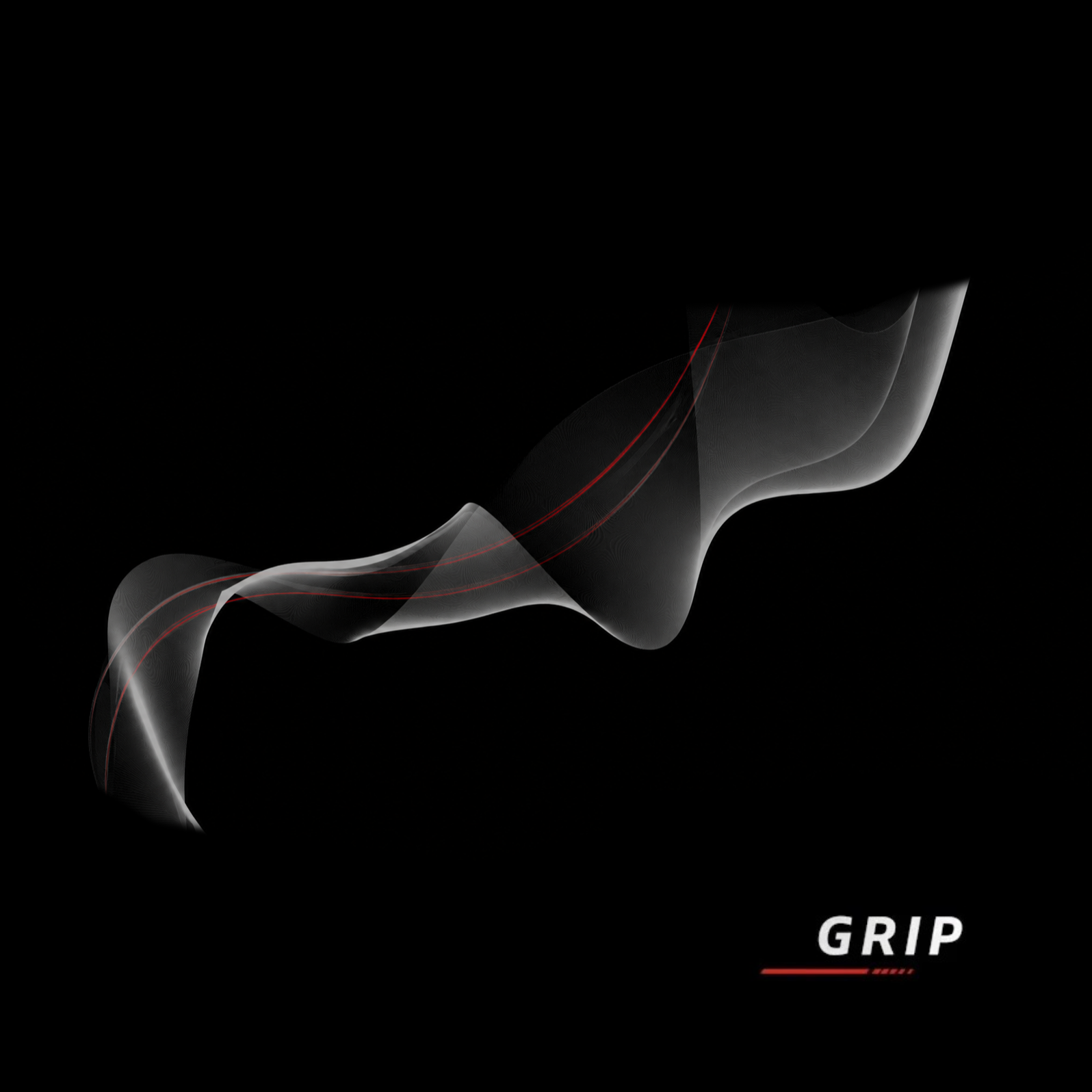
Grip became sweeping curves.
Consistent, continuous trails that hold every bend — traction rendered as form that refuses to break contact with the surface.
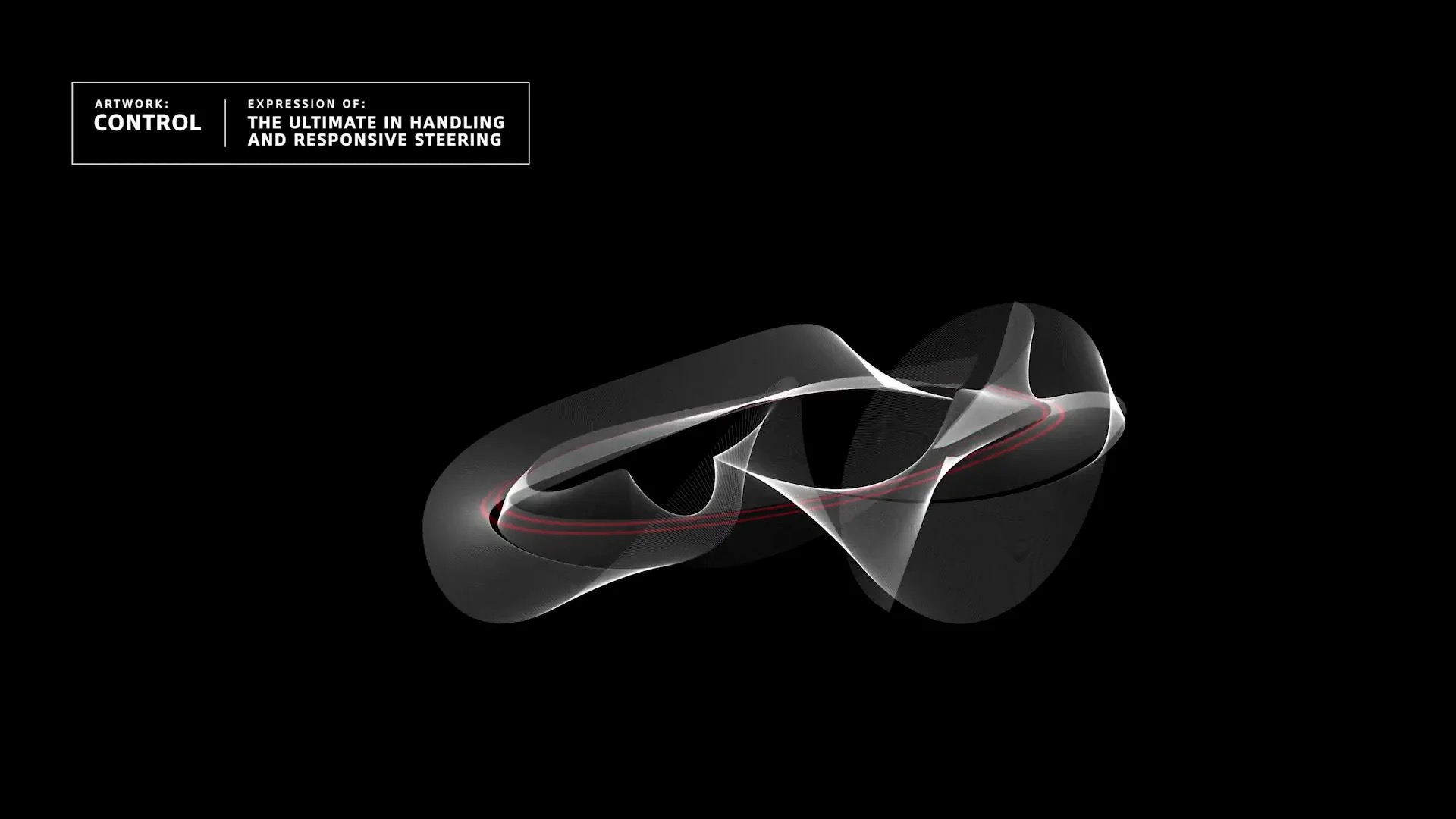
Control became seamless loops.
Handling finesse as light and shadow in continuous motion — responsive steering made visible as a dance that never loses composure.
Four artworks. Four performance truths.
Each piece was generated from the captured drive data, then refined into motion films for the regional campaign across Thailand, Indonesia, Vietnam, Malaysia and Singapore — later shown as an installation at IIMS 2024.
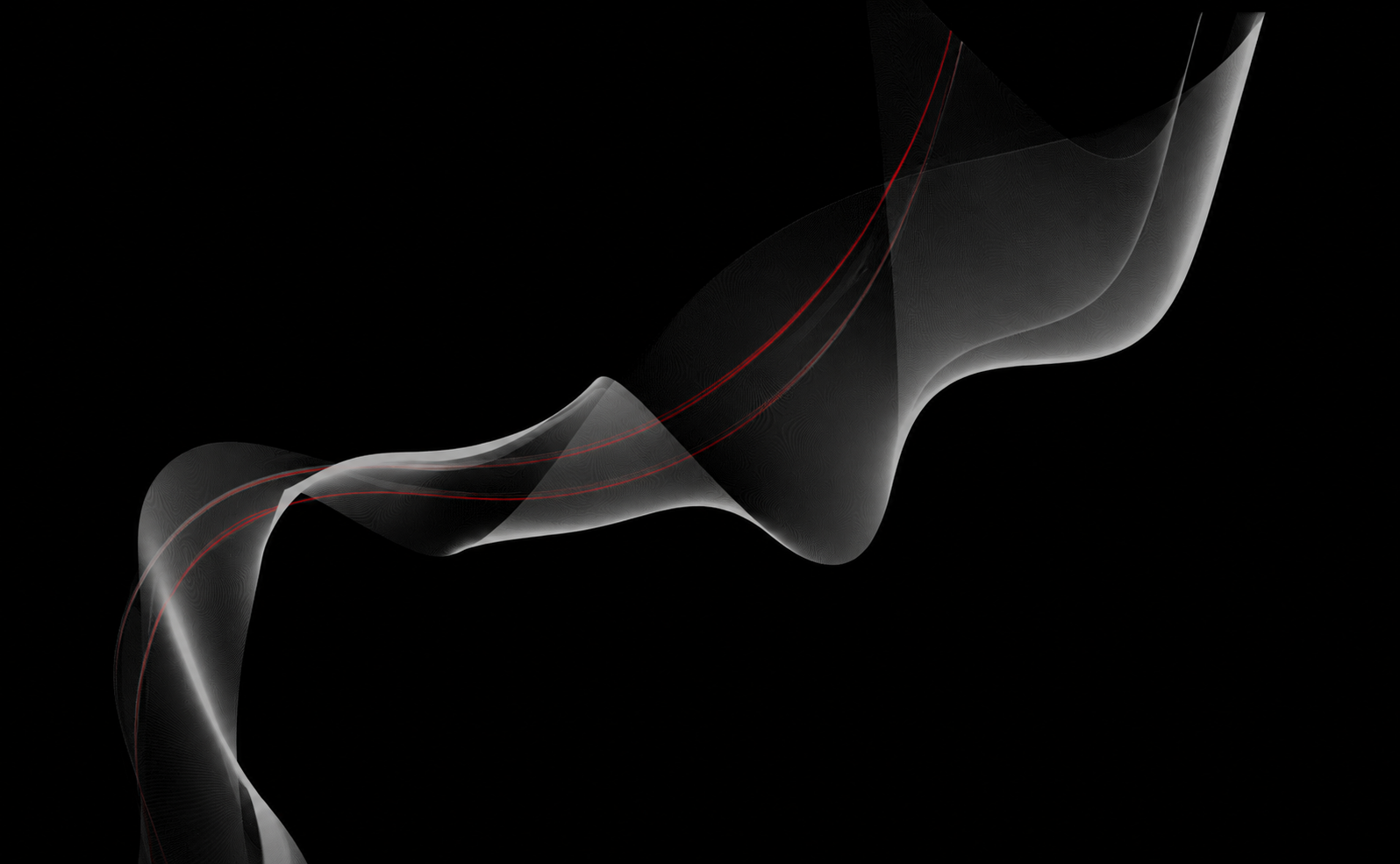
High Speed became straight, swift lines.
Superior straight-line stability expressed as velocity with restraint — the thrill of the ride without losing the tyre’s calm at the limit.
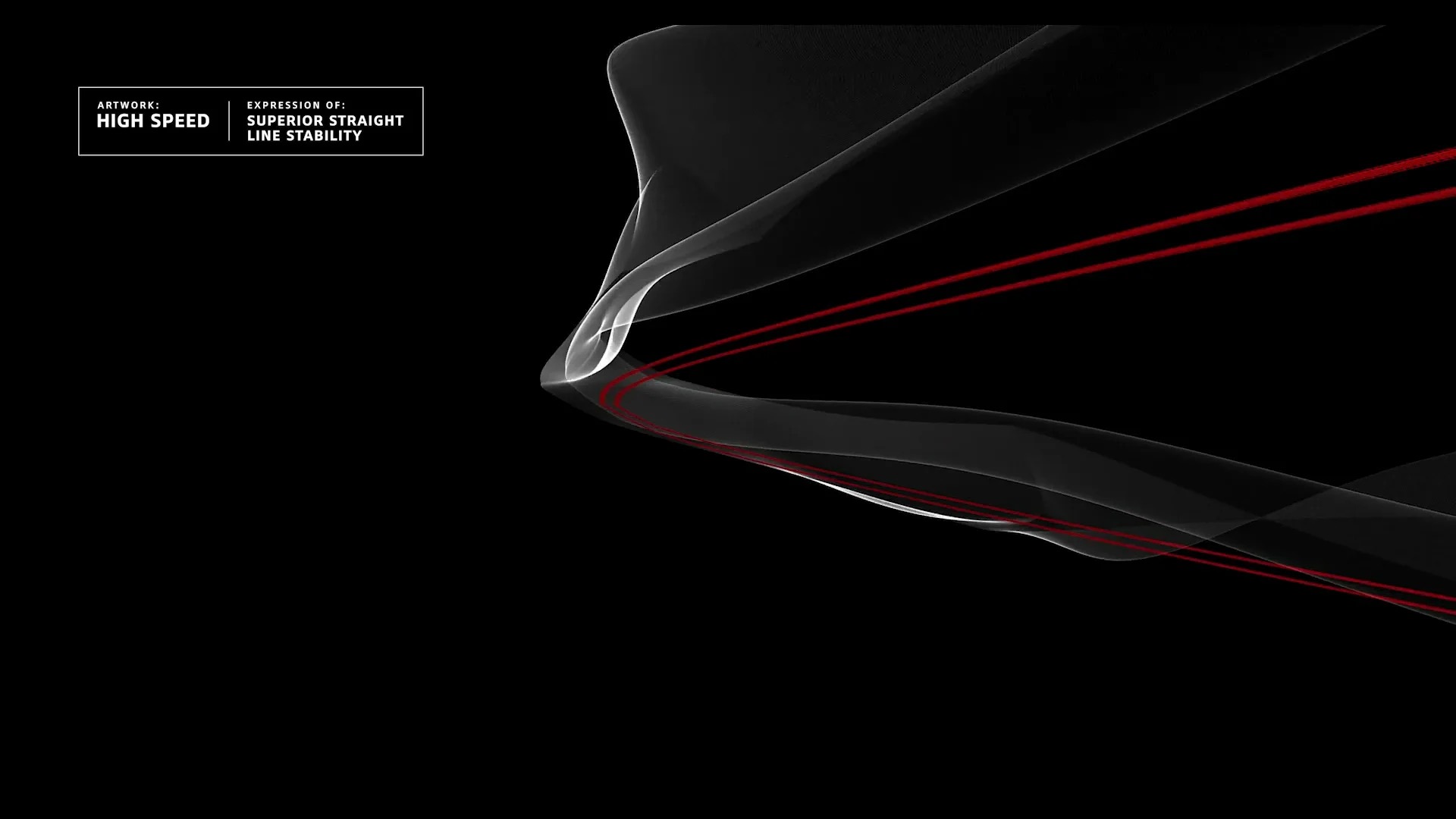
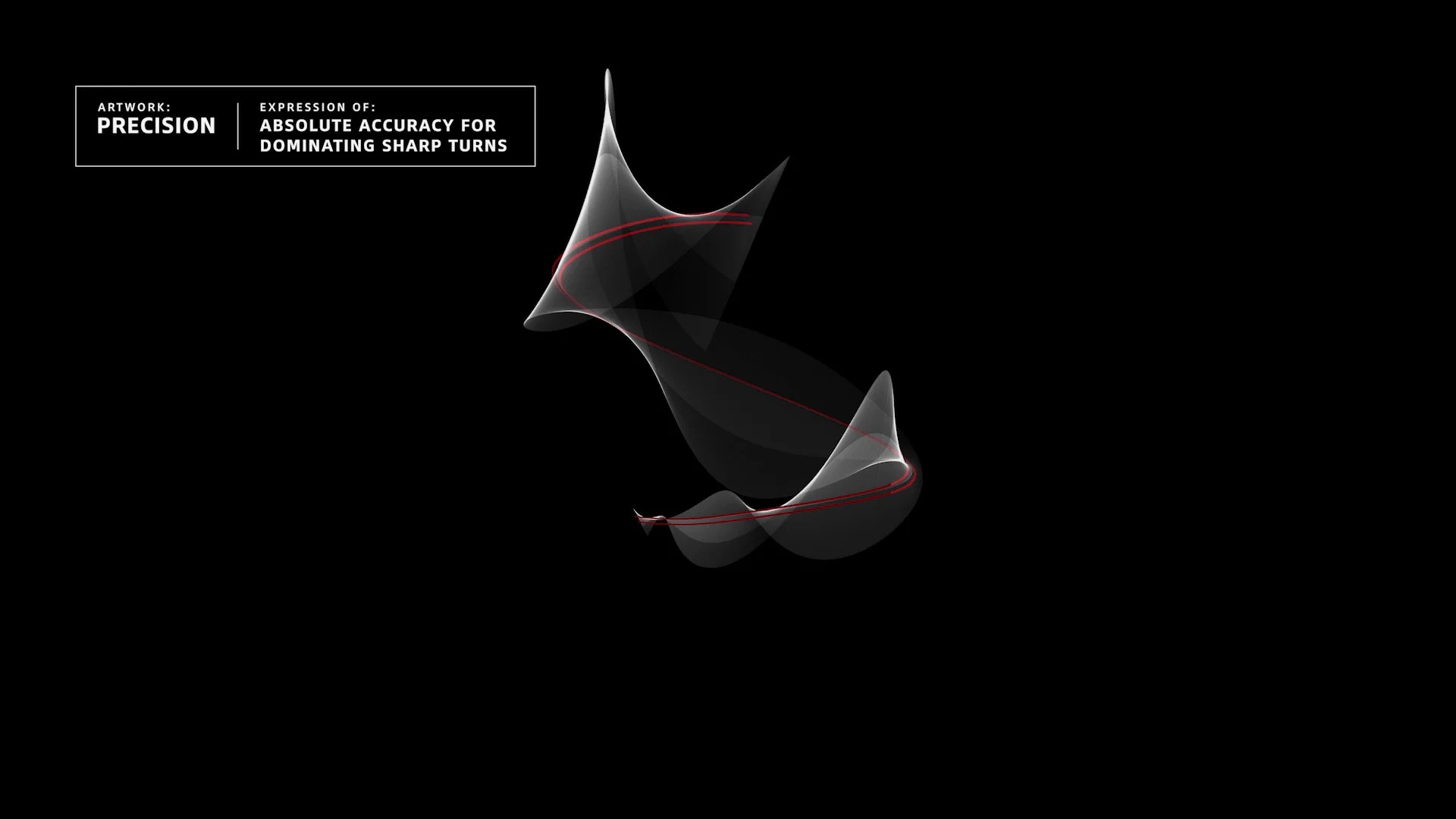
Precision became sharp geometric twists.
Instant responsiveness as mathematical regularity — order and creativity in the same stroke, like a brush that never hesitates.
The pipeline mattered as much as the picture.
Raw spatial and speed feeds had to be normalised, scored and tuned so the generative engine could respond to the drive without becoming noise. TouchDesigner and custom tooling sat alongside the browser-based animation systems used to iterate Grip, Control, High Speed and Precision until the motion films locked.
Studio builds, then track truth.
Early versions lived on black canvases in the studio. Final forms had to survive cinema, social cuts and gallery installation — beautiful enough to stand as art, honest enough to still be the tyre.
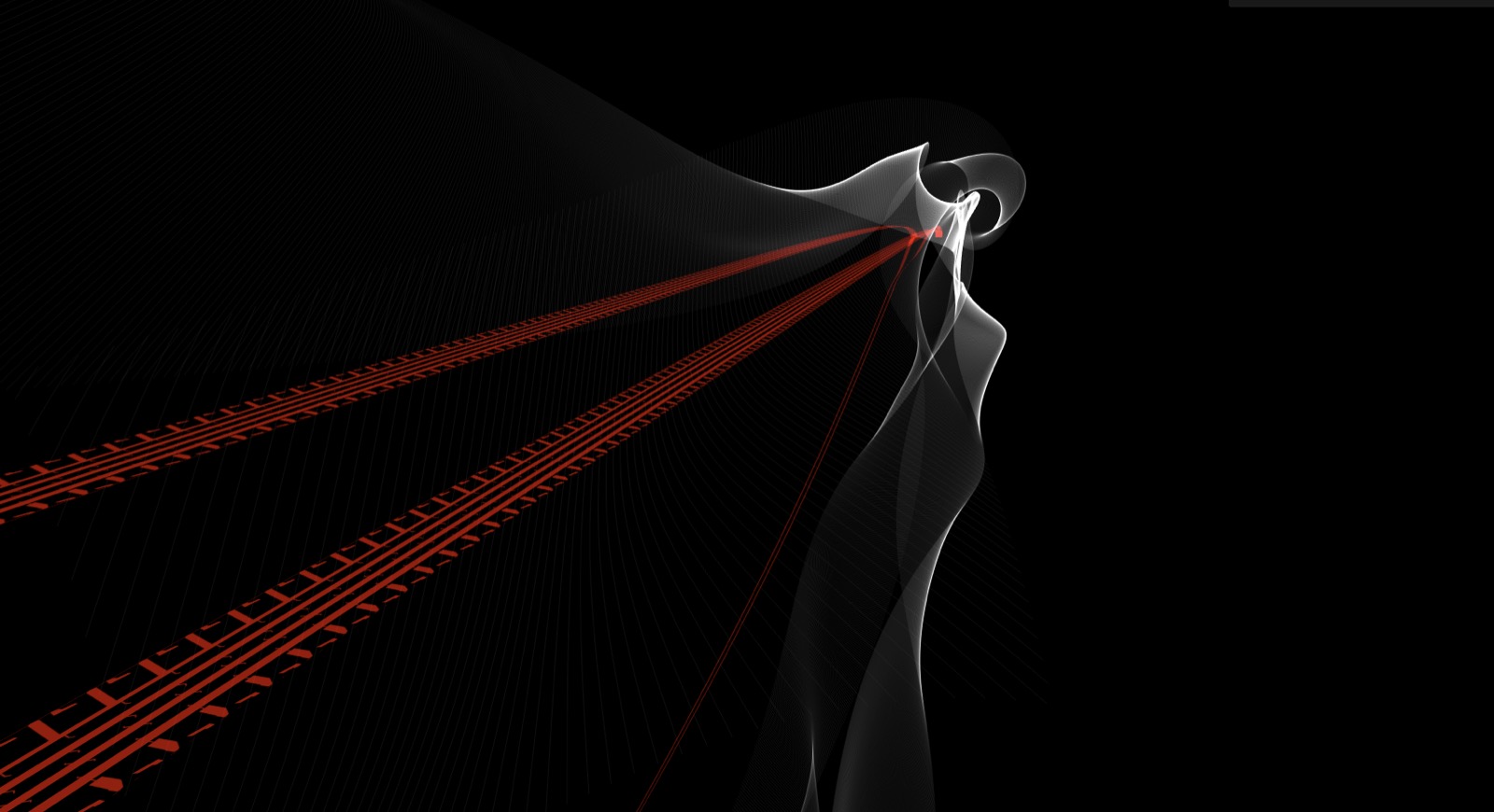
The campaign film put the experiment on screen.
Distillery led the creative. Electriclime° produced. A longer making-of followed the painstaking process from sensor capture to gallery reaction.
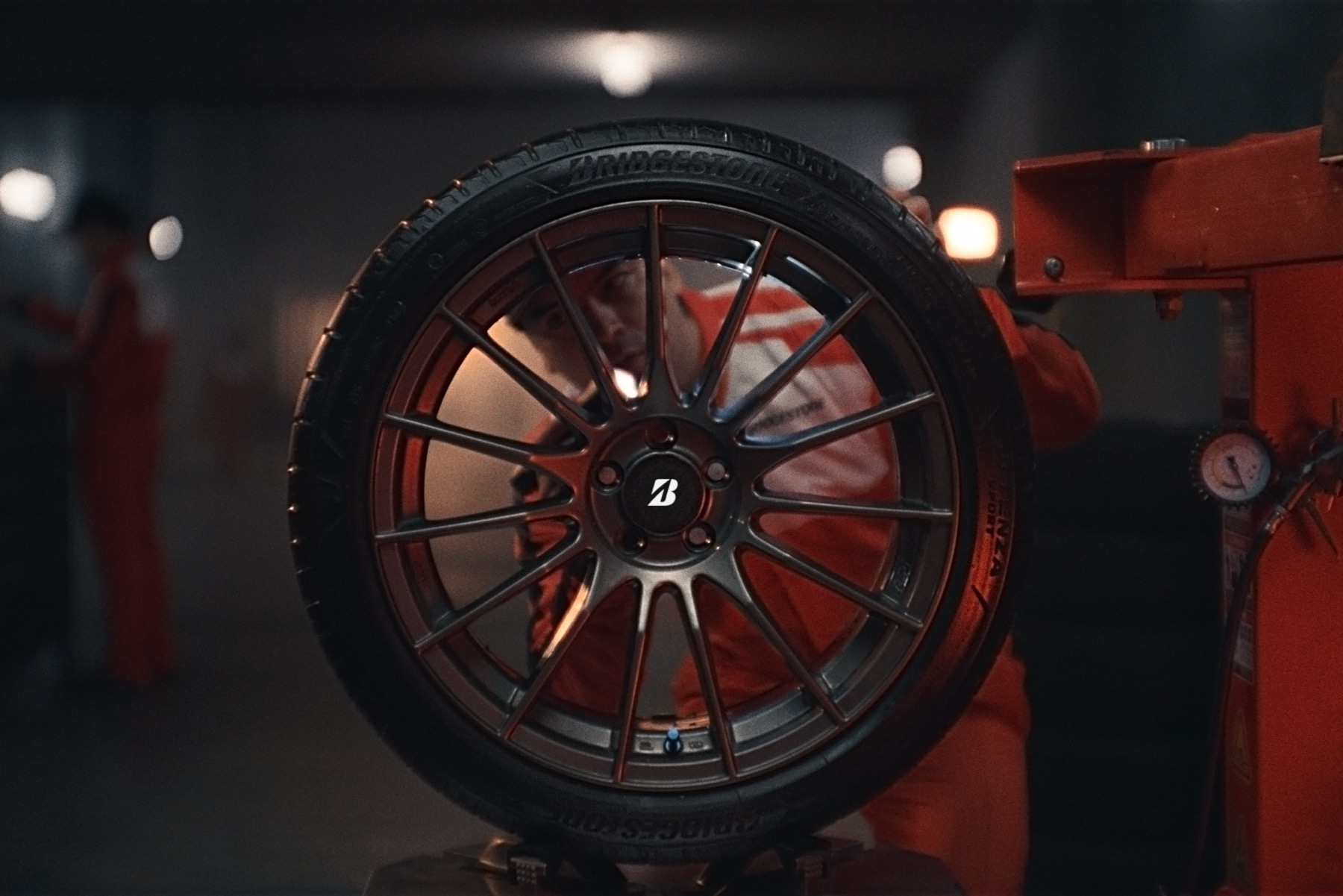
Spatial AI gave a truer feeling of the drive and how the driver experiences Bridgestone tyres.
What is fast is indeed beautiful.
The work answered Bridgestone’s question in public — not as metaphor, but as data made visible. Tyres, drivers, sensors and generative systems collaborating until performance became form.